
Mercy, Judgment, and Rule
Don QuixoteThis thread contrasts the novel's forms of authority, from impulsive knightly judgment to Sancho's practical governance.
increasing Bearing strength in each event
 decreasing
Bearing strength in each eventdecreasingA Knight’s Private Law
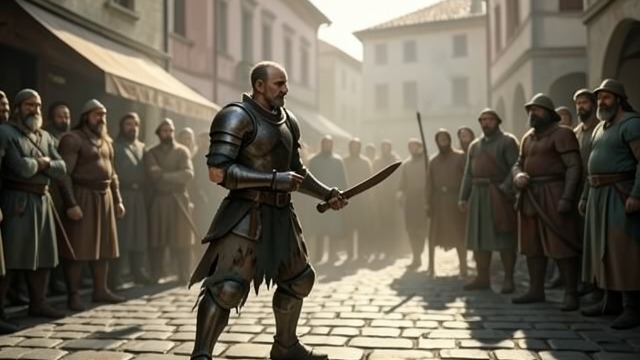
A Knight’s Private Law
Duty imagined
Don Quixote believes knight-errantry authorizes him to correct wrongs wherever he sees them. His private code often supersedes ordinary law.
Justice at risk
His interventions can ignore evidence and lasting consequences. The novel asks whether noble motives suffice to justify action.
The Galley Slaves’ Freedom
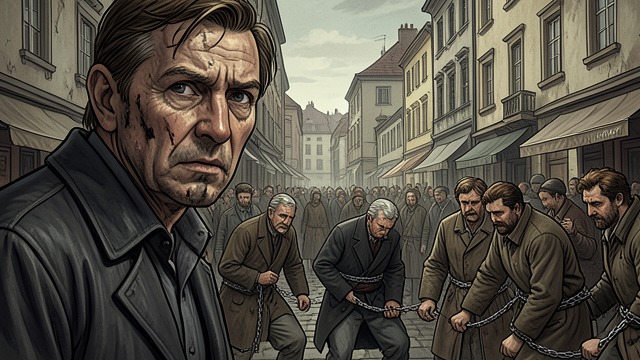
The Galley Slaves’ Freedom
Compassion asserted
Don Quixote calls it unjust to make people slaves when nature made them free. He attacks the guards and releases the prisoners.
A moral ambiguity
The newly freed men do not share his ideals and turn on him. His declaration remains powerful even as his action proves reckless.
Sancho as Governor
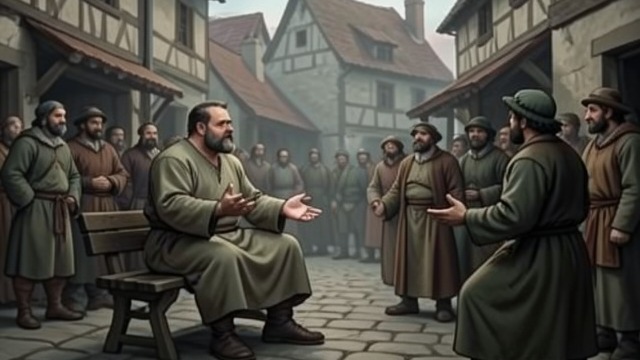
Sancho as Governor
Judgment from experience
Sancho hears disputes and draws on common sense rather than legal training. His decisions surprise the people who staged his appointment.
A humane measure
He often balances formal rules with practical compassion. His government offers a comic but serious alternative to Don Quixote's impulsive justice.
The Cost of Office
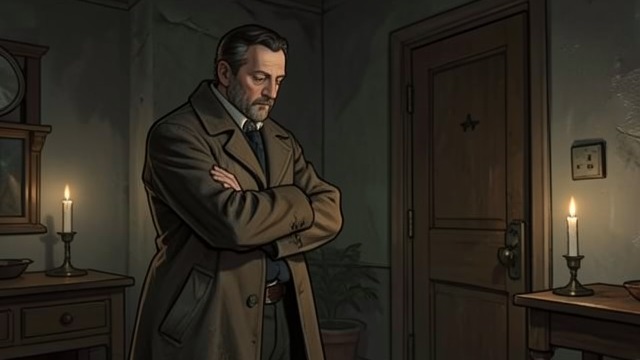
The Cost of Office
Authority constrained
A mock attack leaves Sancho physically trapped and dependent on others. His title cannot protect him from the duke's control of the situation.
Resignation as judgment
Sancho decides that the governorship costs too much freedom and comfort. He gives up power rather than preserve its appearance.
Counsel Before Departure
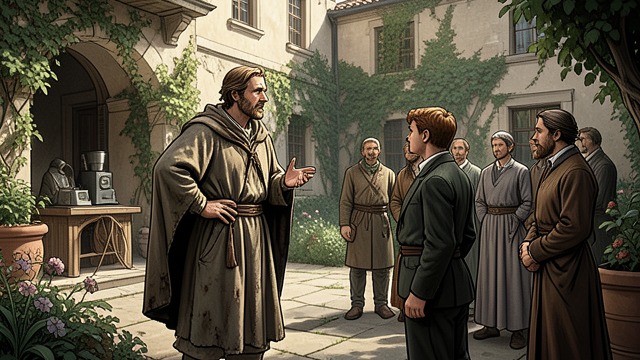
Counsel Before Departure
Don Quixote advises
Don Quixote instructs Sancho to fear God, seek truth, temper justice with mercy, and avoid bribery. The advice is more rational than many of his adventures.
A standard for rule
Sancho's later decisions echo this counsel imperfectly but meaningfully. The narrative separates good principles from the eccentric mentor who voices them.
At the beginning of the first sally
During the second sally
During the Barataria government
During the staged siege
Before Sancho leaves for Barataria
